Beta Acid
Notework
Notework is a collaborative workspace for teams that brings documents, projects, structured collections, issue tracking, and company knowledge into one product.
Beta Acid designed and built the platform from the ground up, with Claude embedded throughout the experience to help users turn conversations into structured work, summarize complex information, create useful content, and work with their Notework data from Claude itself.
- AI
- Development
- Web
- Infrastructure & Architecture
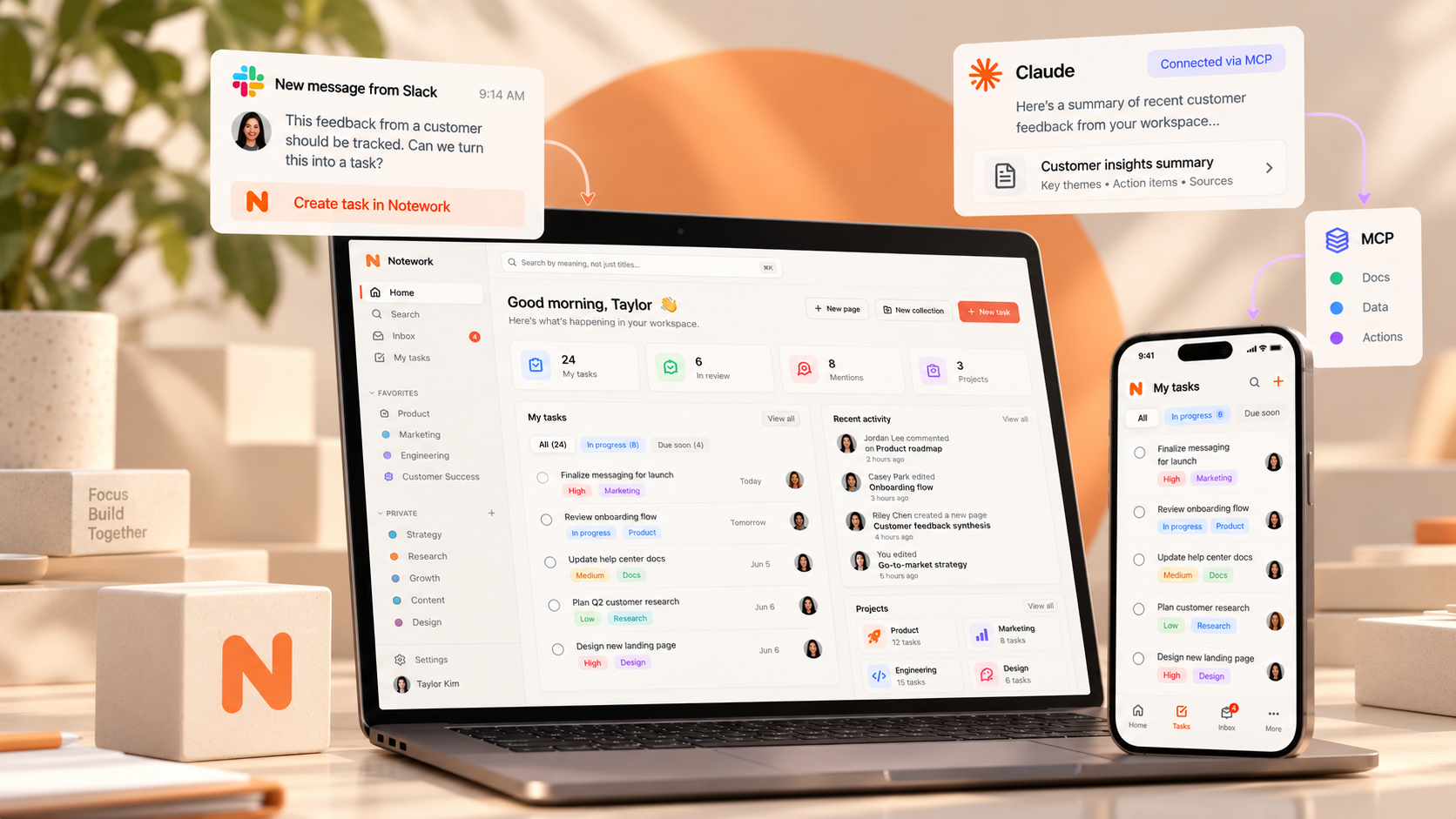
AI that understands the work, not just the prompt
Challenge
Modern teams create an enormous amount of information, but very little of it arrives neatly organized. Decisions live in conversations. Project context is scattered across pages and threads. Issues are described differently by every person. And keeping all of that information structured usually becomes another job for the team.
For Notework, simply adding an AI chat box was not enough. The product needed AI that could understand the context of a workspace, recognize what a user was trying to accomplish, and help turn unstructured information into useful, organized work without making the experience feel unpredictable or intrusive.
Oursolution
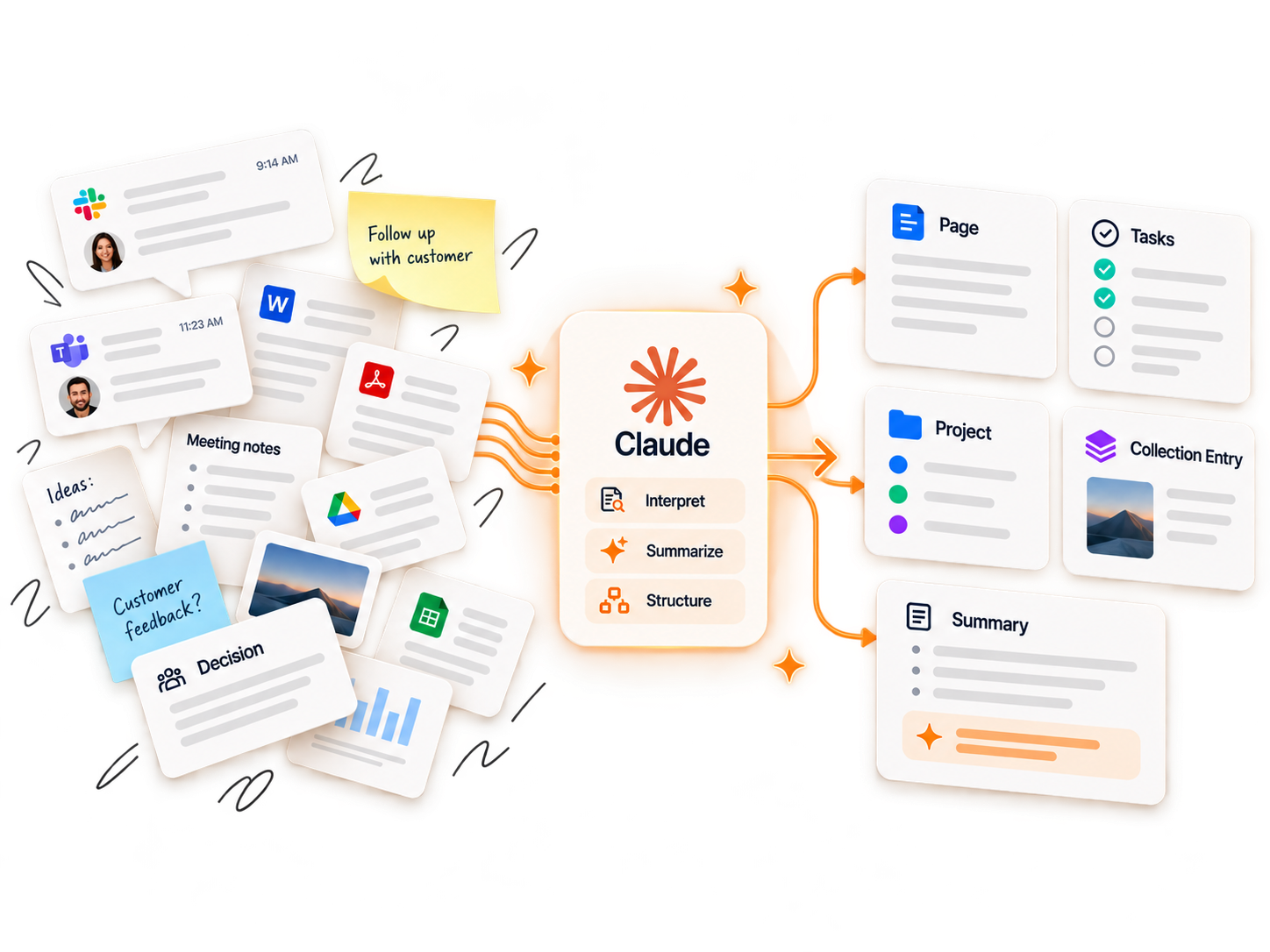
We built Claude into Notework as an intelligence layer across the product, not as a separate destination users have to visit.
Claude is used when a task benefits from interpretation, synthesis, or generation: understanding a conversation, summarizing a body of work, drafting content, extracting the important parts of unstructured information, or turning that information into something structured and actionable. The rest of the product remains familiar, predictable software.
AIwhere the work already happens
Instead of forcing users to stop what they are doing and start a conversation with an assistant, Notework brings Claude directly into the workflows where it is useful.
Users can summarize information, generate and rewrite content, extract key decisions, organize messy notes, and turn loosely structured input into pages or collection entries. The experience is designed around a simple idea: AI should remove work, not create another tool to manage.
Fromconversation to structured work
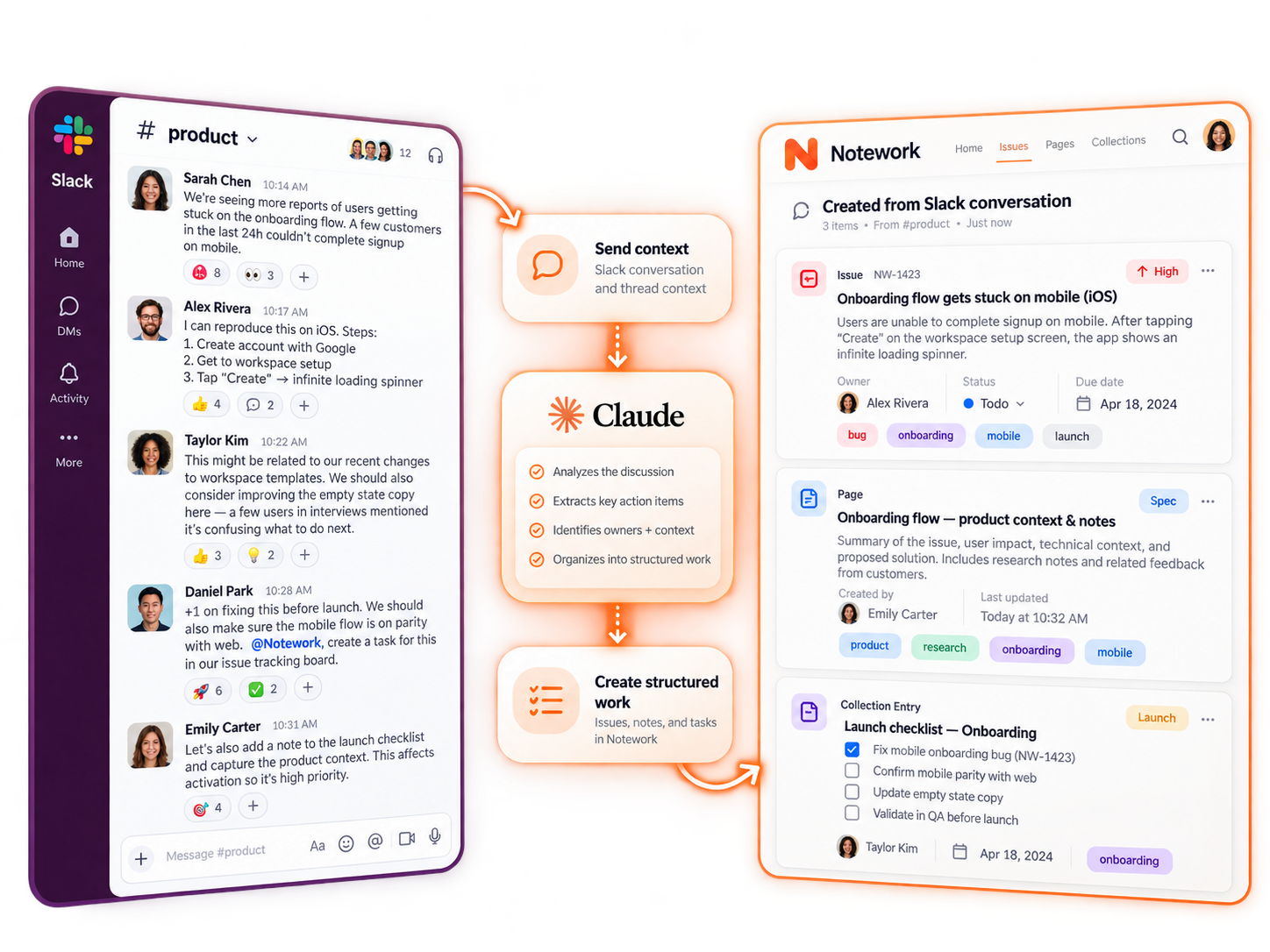
A huge amount of important work begins in Slack, but conversations are a terrible long-term system of record. Notework uses Claude to bridge that gap.
Slack conversations can be interpreted and summarized, then turned into useful workspace content such as pages, project documentation, issues, or structured collection entries. Instead of asking someone to manually copy, clean up, and reorganize the conversation, Claude handles the first pass while the team stays in control of the result.
Notework, inside Claude
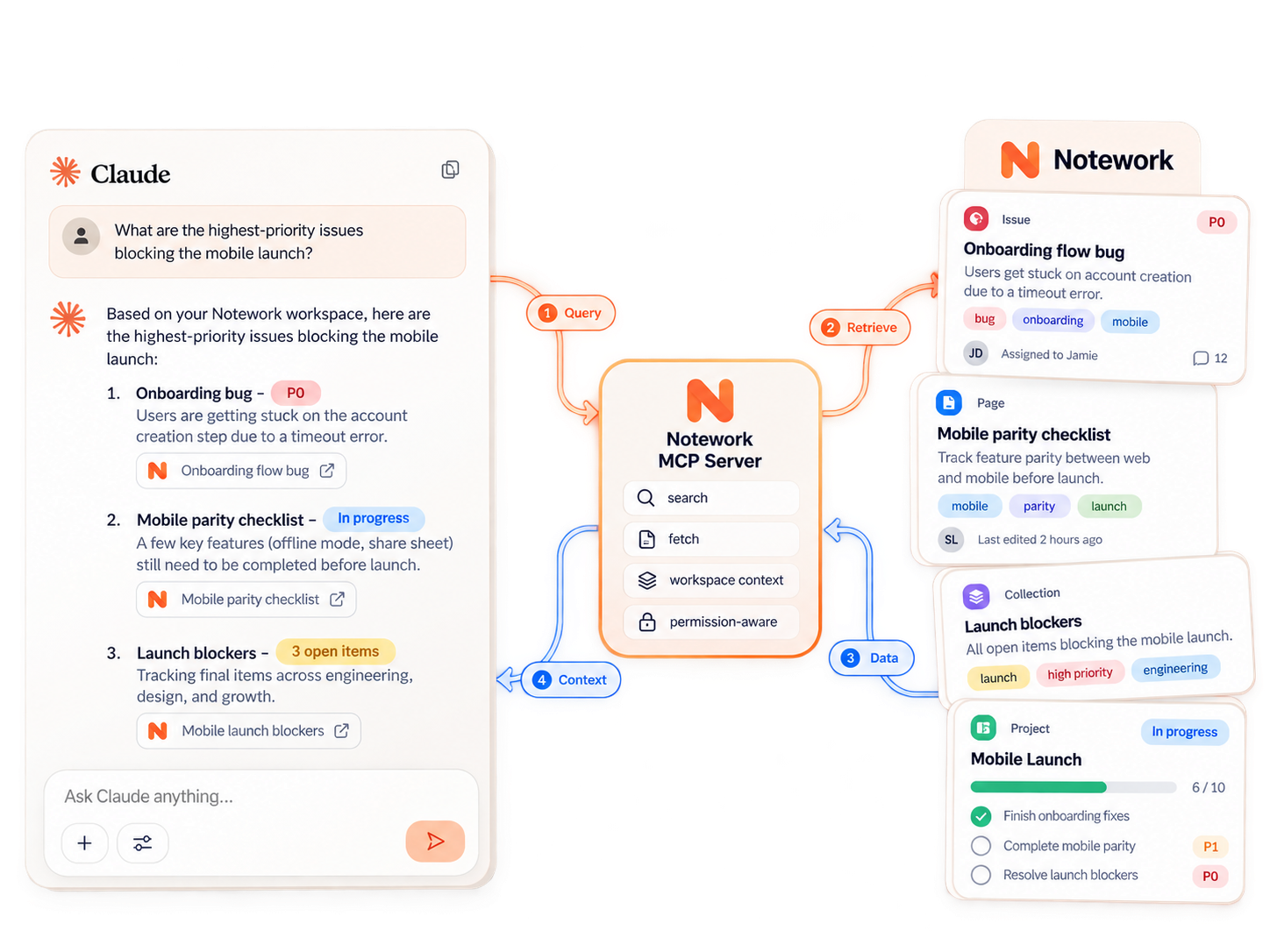
We also built a Model Context Protocol (MCP) server for Notework, allowing Claude to securely work with the information already stored in a user's workspace.
Through Claude connectors, users can ask questions about projects, pages, collections, issues, or other workspace knowledge without manually copying information between tools. Claude can search and retrieve the relevant Notework context while respecting the same workspace access model as the user.
That turns Notework from a place Claude can write into a source of trusted business context Claude can reason with.
Technology that powered this project



Architecture
Notework was built as a multi-tenant B2B SaaS platform using Next.js, React, TypeScript, Supabase, and Vercel, with Claude's APIs powering the product's AI capabilities.
The application keeps the responsibilities of AI and conventional software deliberately separate. Claude handles tasks that require language understanding, interpretation, summarization, and generation. Notework's application layer handles permissions, data validation, business rules, and the durable structure of the workspace.
This gives the product the flexibility of generative AI without making core product behavior dependent on unpredictable free-form output.
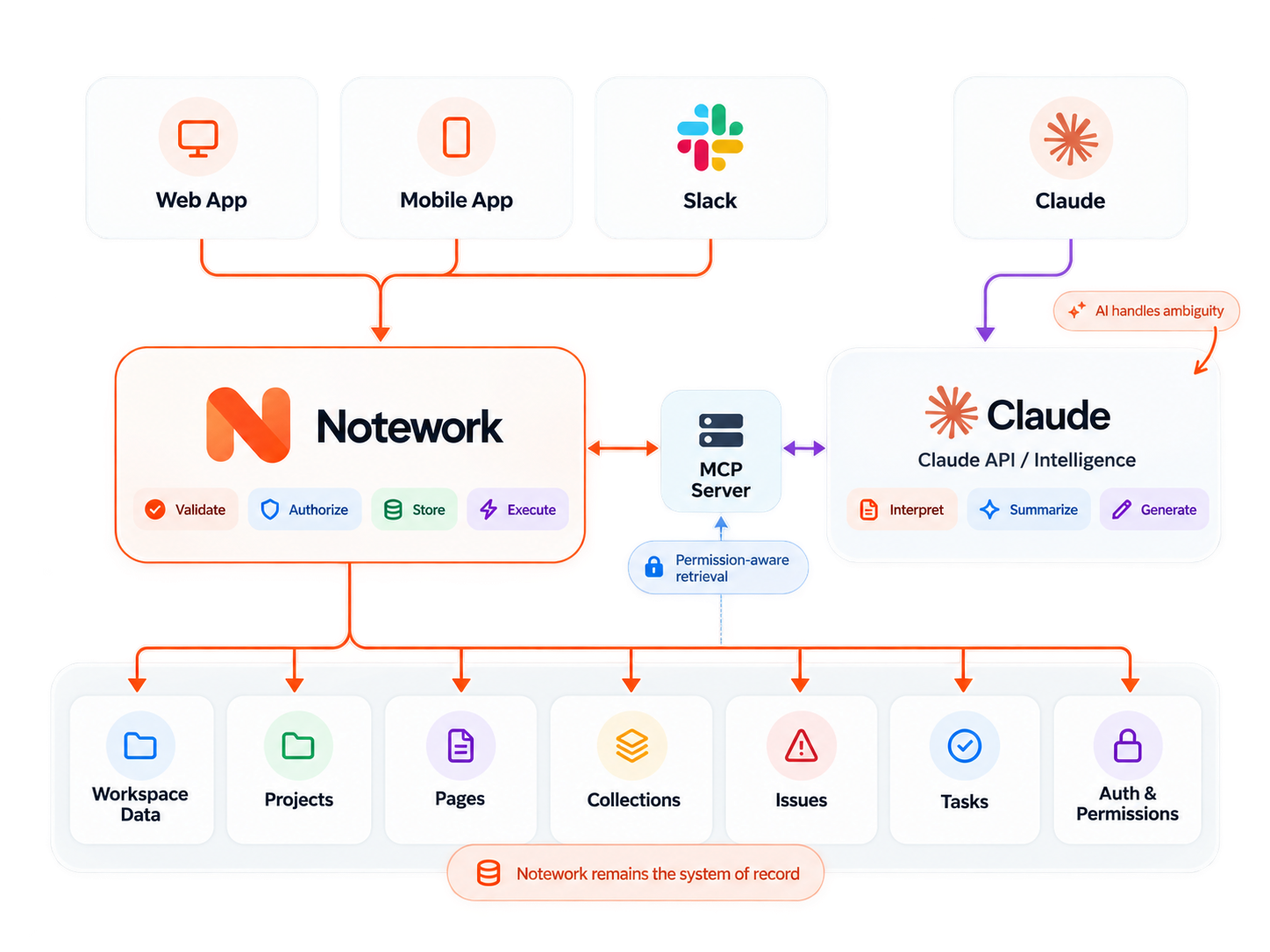
The same principle applies to the MCP integration. Claude can retrieve useful context from Notework through a permission-aware interface, while Notework remains the system of record. The result is an architecture where AI can understand and assist with the work without bypassing the structures that keep a business workspace organized.
Result
Beta Acid designed and built Notework as a complete B2B workspace platform with AI woven into the way teams actually work. Claude helps turn raw information into useful knowledge, transform conversations into structured work, and give users a faster way to understand what is happening across their workspace. Through MCP, that same workspace can also become a source of context for Claude outside the Notework application itself. The result is an AI-enabled product that does not depend on AI as a gimmick. The intelligence is there when it saves time or reduces friction, and stays out of the way when conventional software is the better tool for the job.