Beta Acid
Service Physics
Service Physics works with hospitality and service-based organizations to provide data-driven operations consulting and strategy. They do this by carrying out observational studies in the field, synthesizing collected data, and data-backed insights and solutions for their clients.
Service Physics engaged Beta Acid to design and build its mobile app that facilitates data collection and reporting.
- UX/UI Design
- Development
- Mobile

Challenge
Service Physics utilizes a variety of different methods to track employee activity and provide its clients with insightful data. However, Service Physics used spreadsheets to log observed activities while walking around a client’s location.
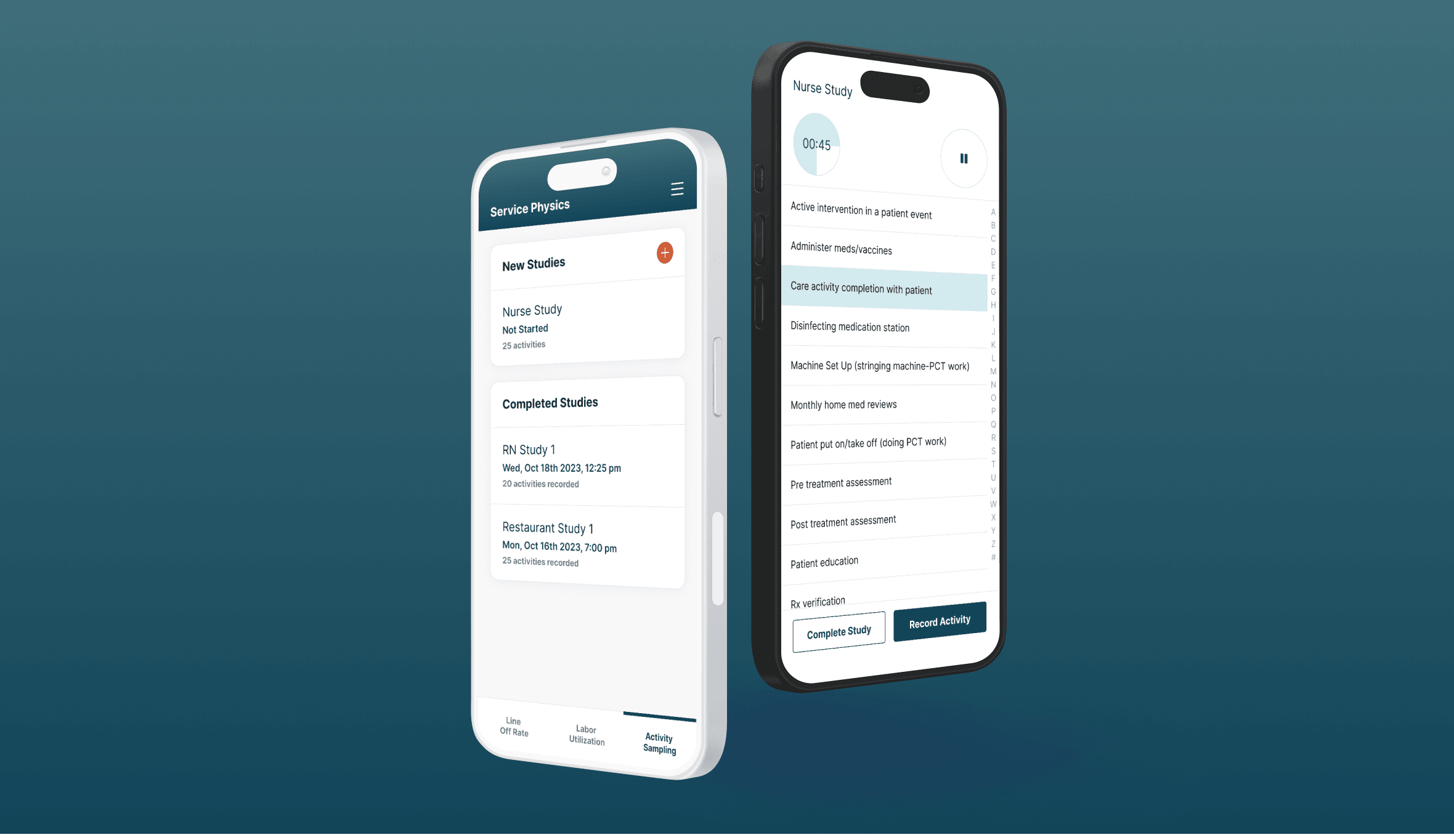
This proved to be a cumbersome and inefficient experience. Our challenge was to seamlessly integrate Service Physics’ activity sampling process into a mobile app, simplifying life for observers without losing core functionality.
Theproblem
An initial series of discovery calls with the Service Physics team provided insight into their current methodology, and the pain points their users were experiencing when carrying out studies.
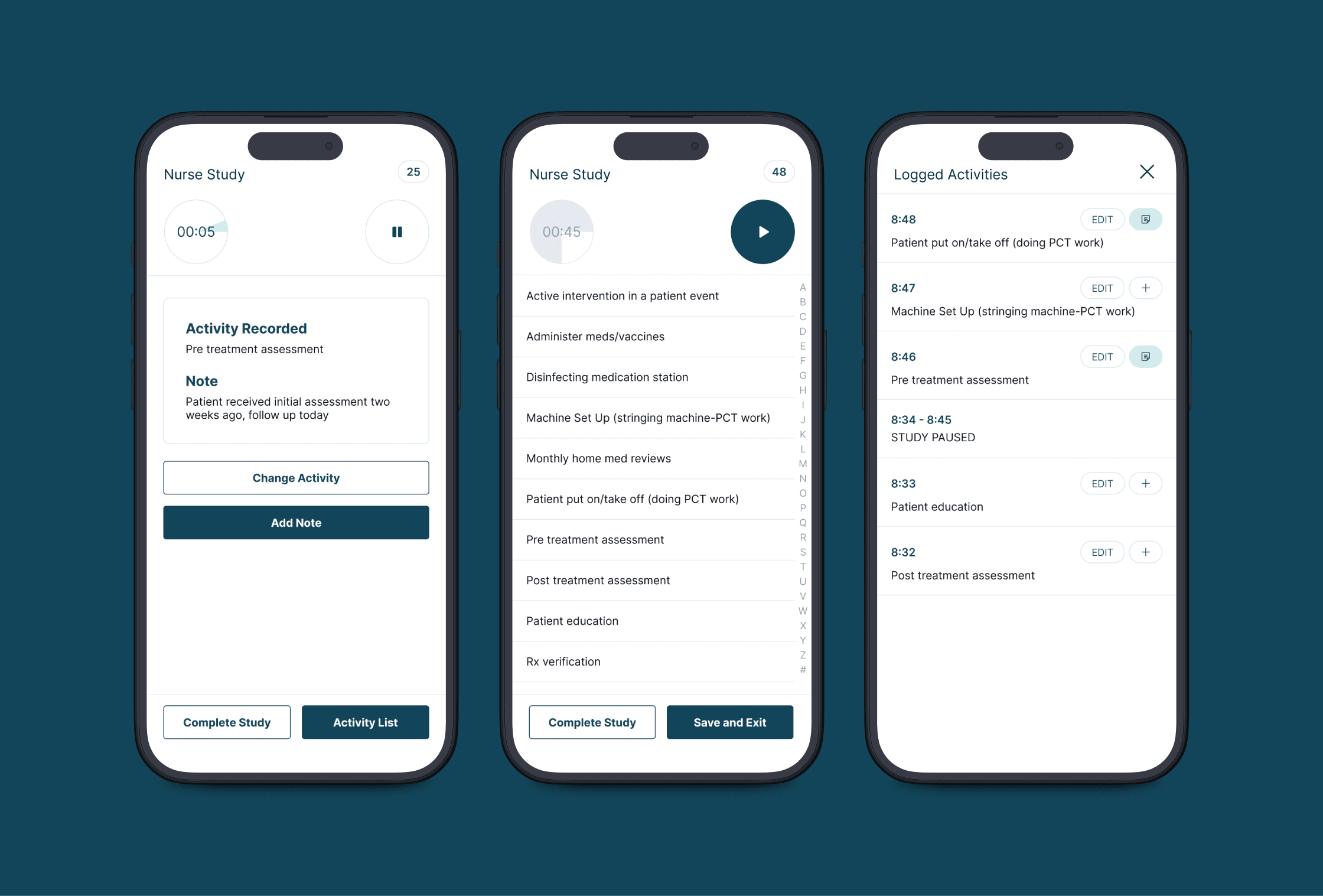
Using a spreadsheet on a laptop to record activities in the field on a minute-by-minute basis was not ideal. The solution was to bring this functionality into a mobile app, allowing users to move more freely and record observations in a more efficient and intuitive way.
Userflows
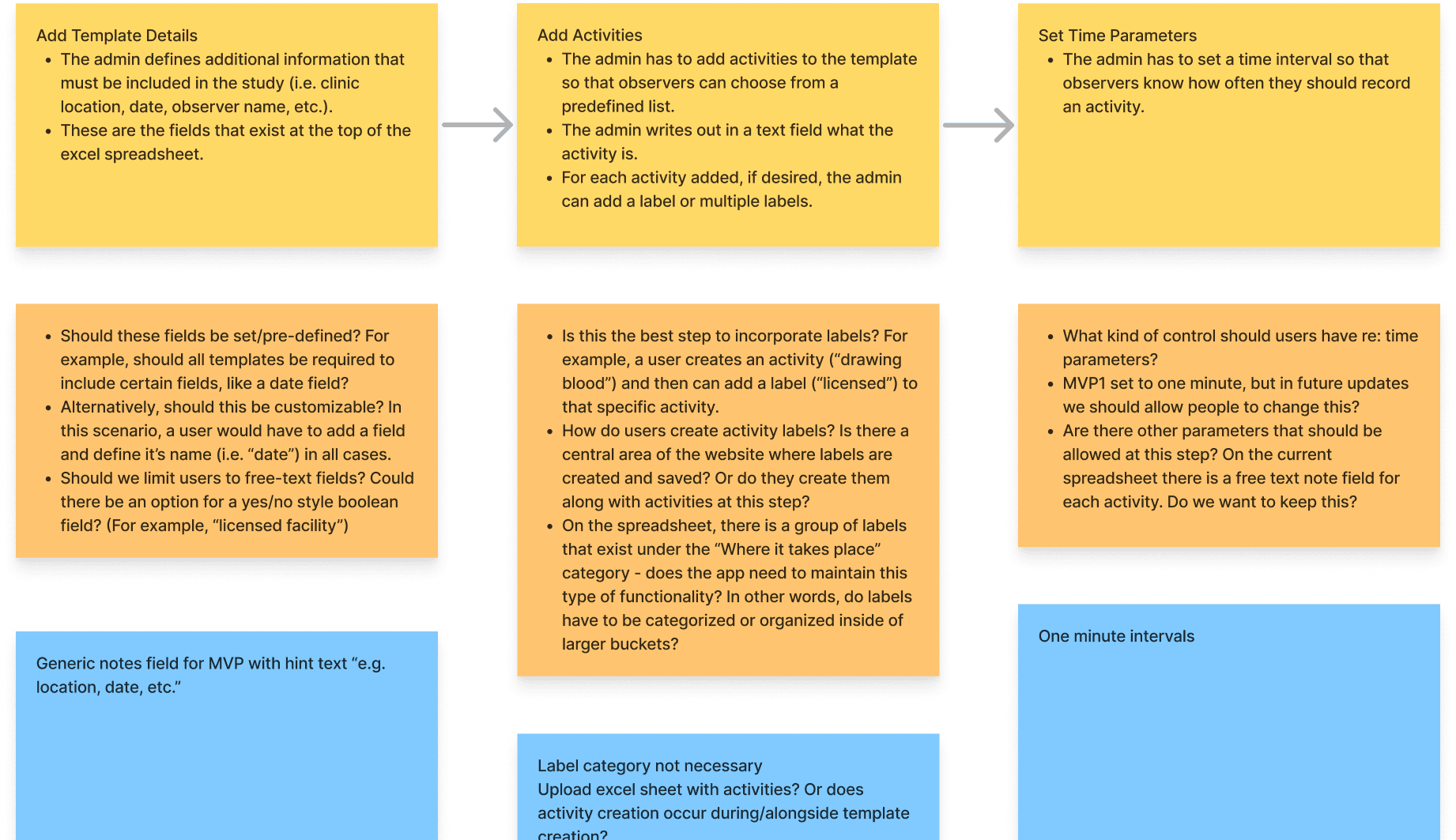
Our design team created a series of user flows to map out potential solutions. Crucially, our brainstorming sessions led us to considerations beyond a simple app redesign, in an attempt to address issues in a more holistic manner.
One initial proposal involved building not just a mobile app, but an integrated web app as well. This would allow Service Physics to create and maintain a database of study templates, register users, and eliminate the use of third-party software, giving them control over study parameters.
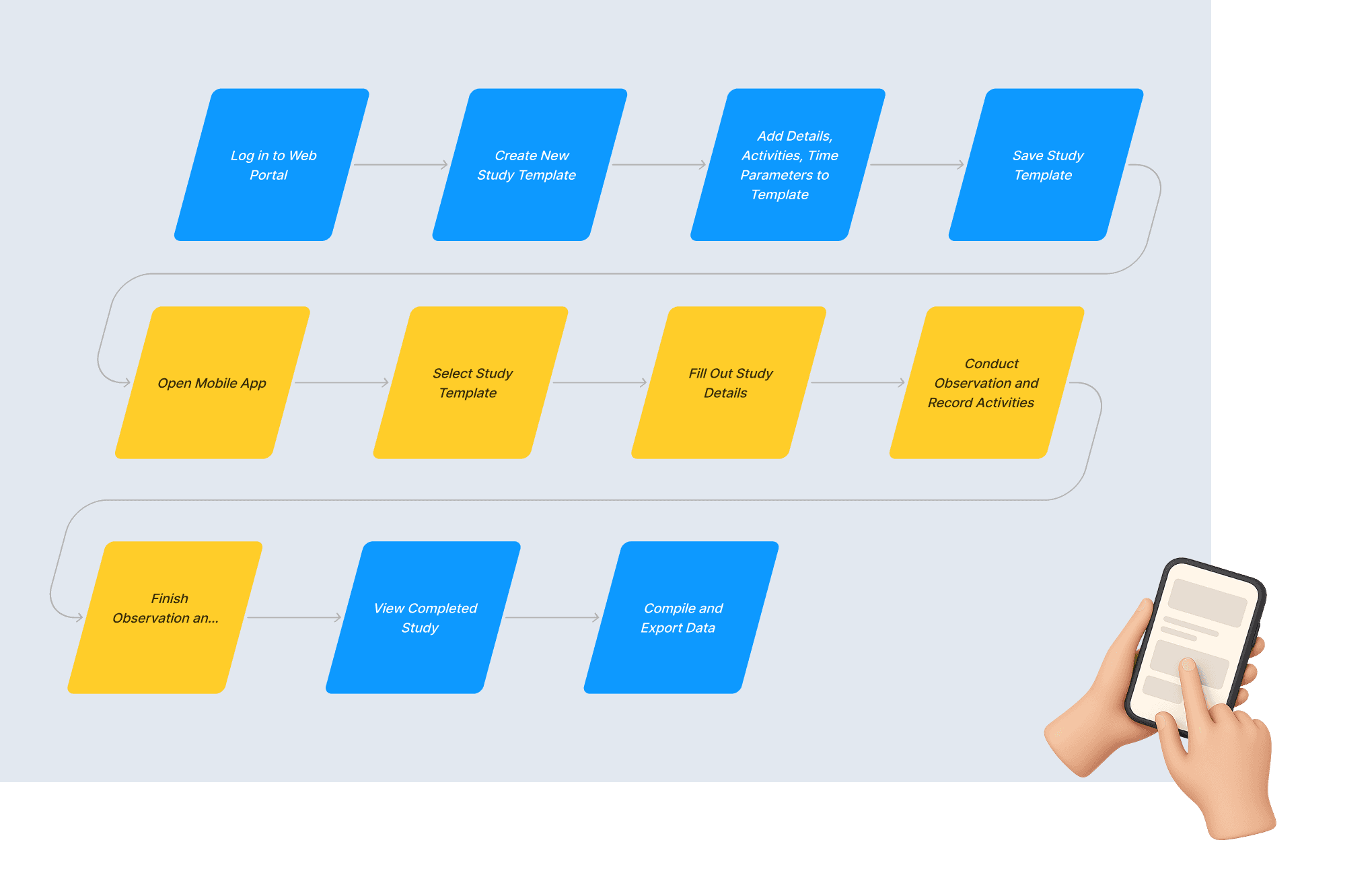
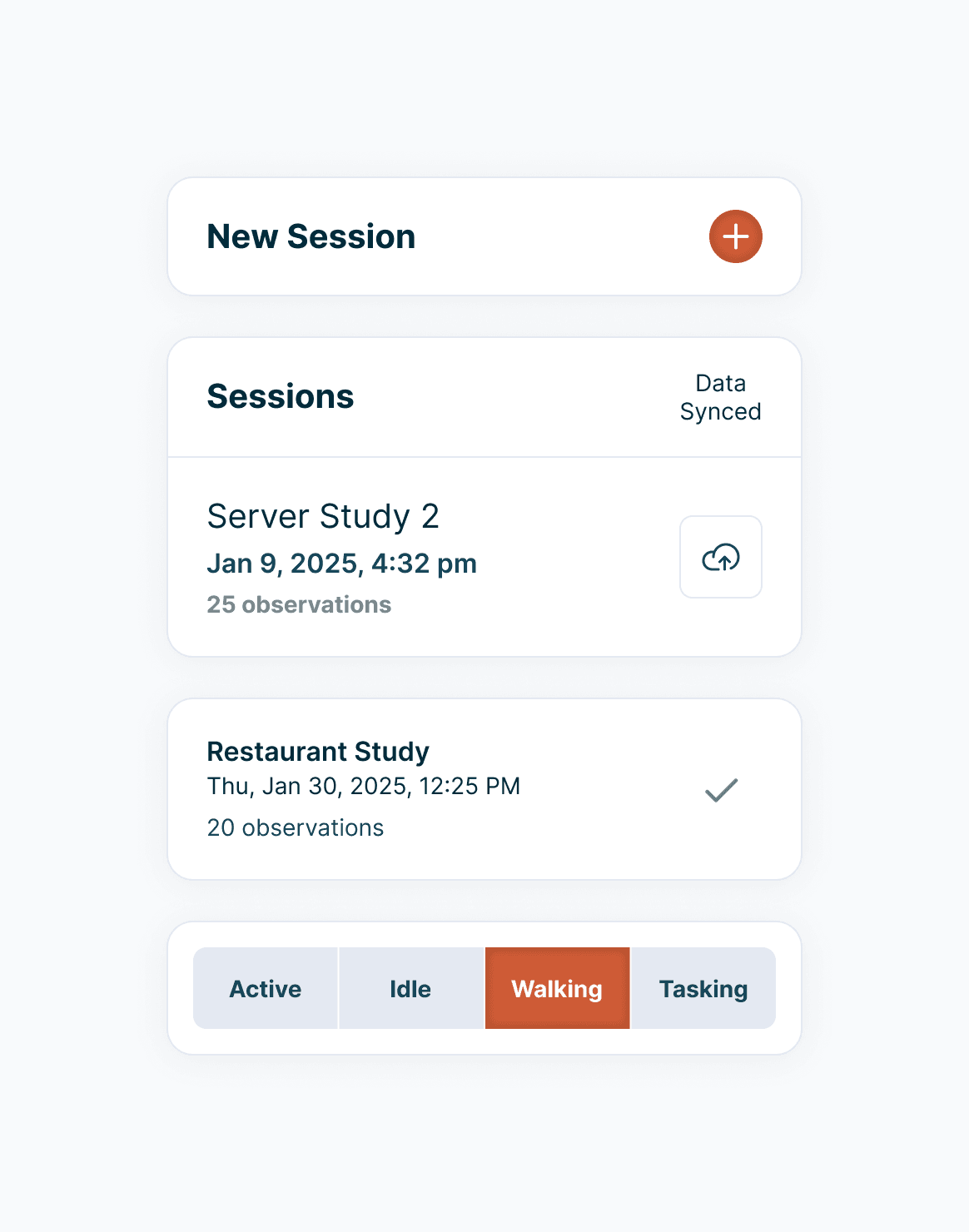
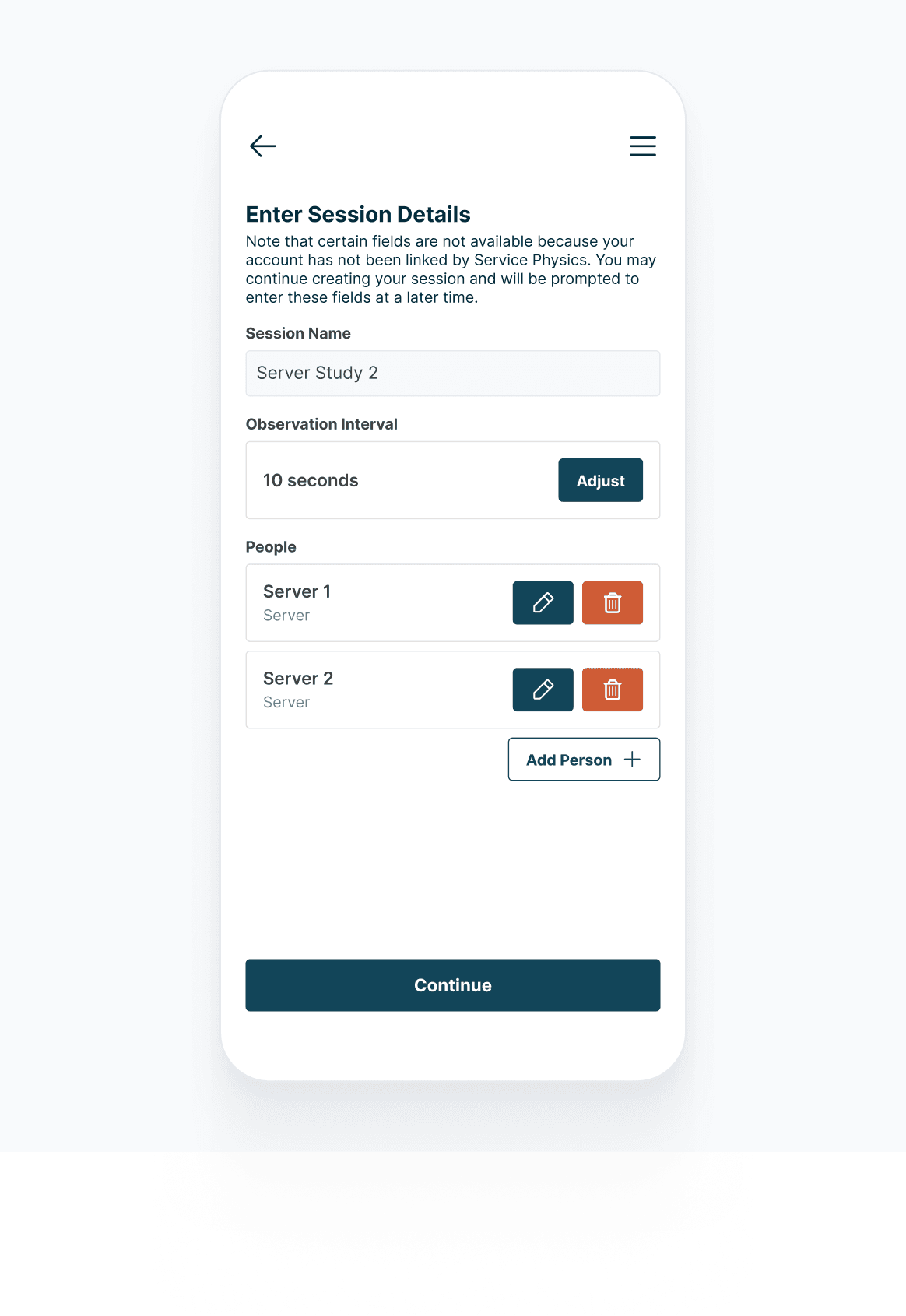
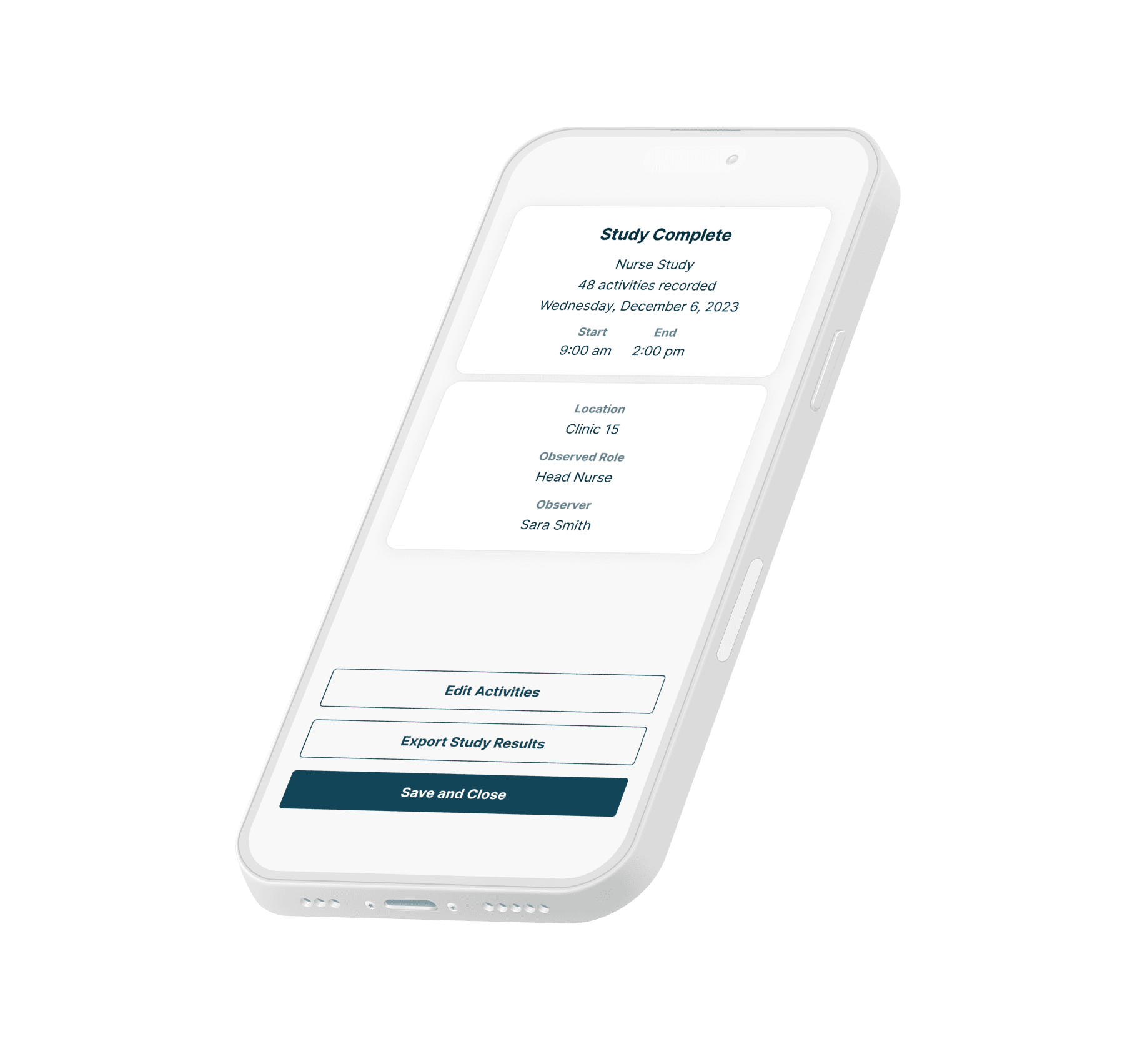
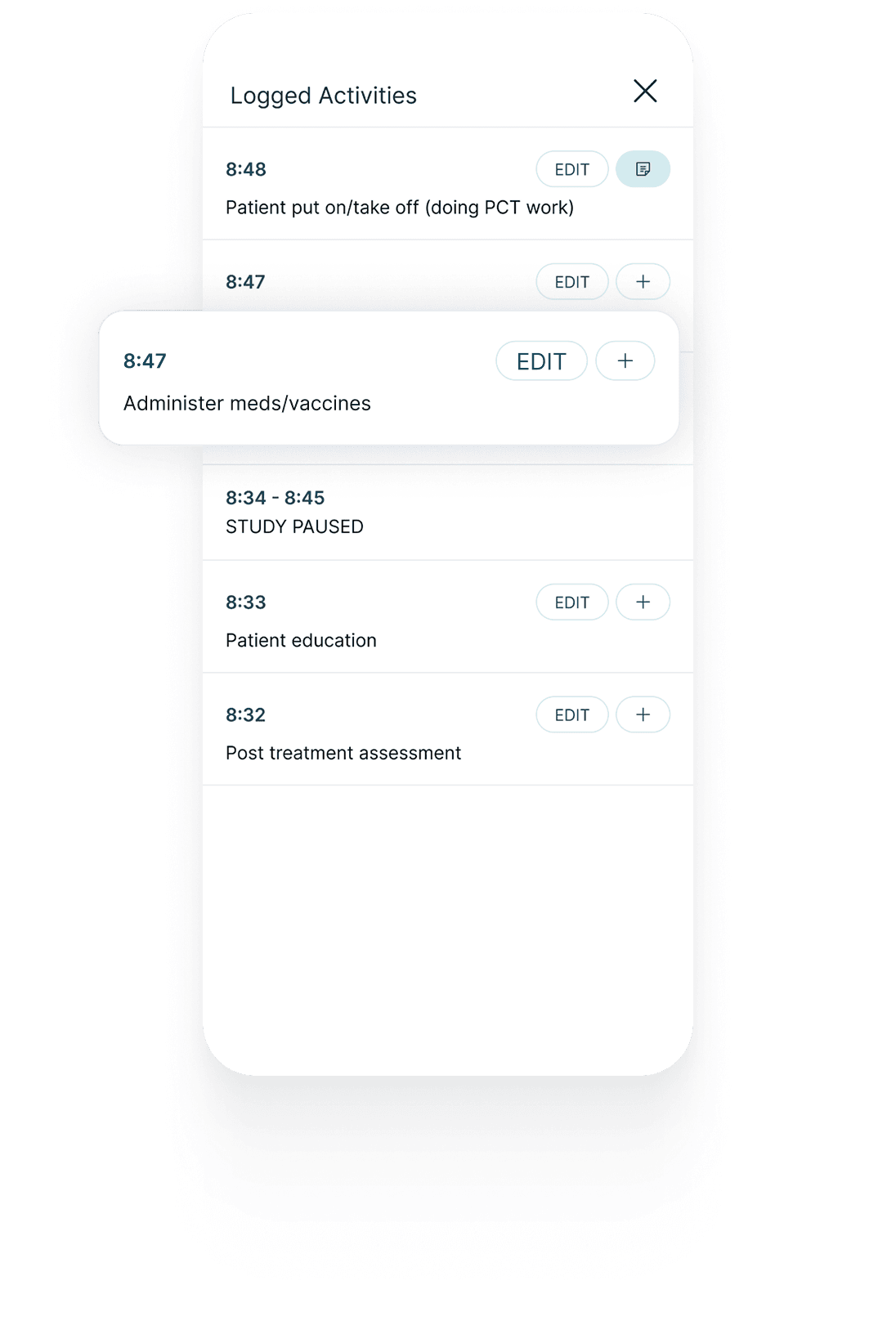
Ultimately, our teams settled on a blended solution to launch an MVP app fast: Service Physics would continue to use external spreadsheet software to maintain its lists of study activities. The mobile app would facilitate the core features key to performing an observation: creating new studies, setting time parameters, uploading activities, recording observations, and exporting study results.
Wireframes
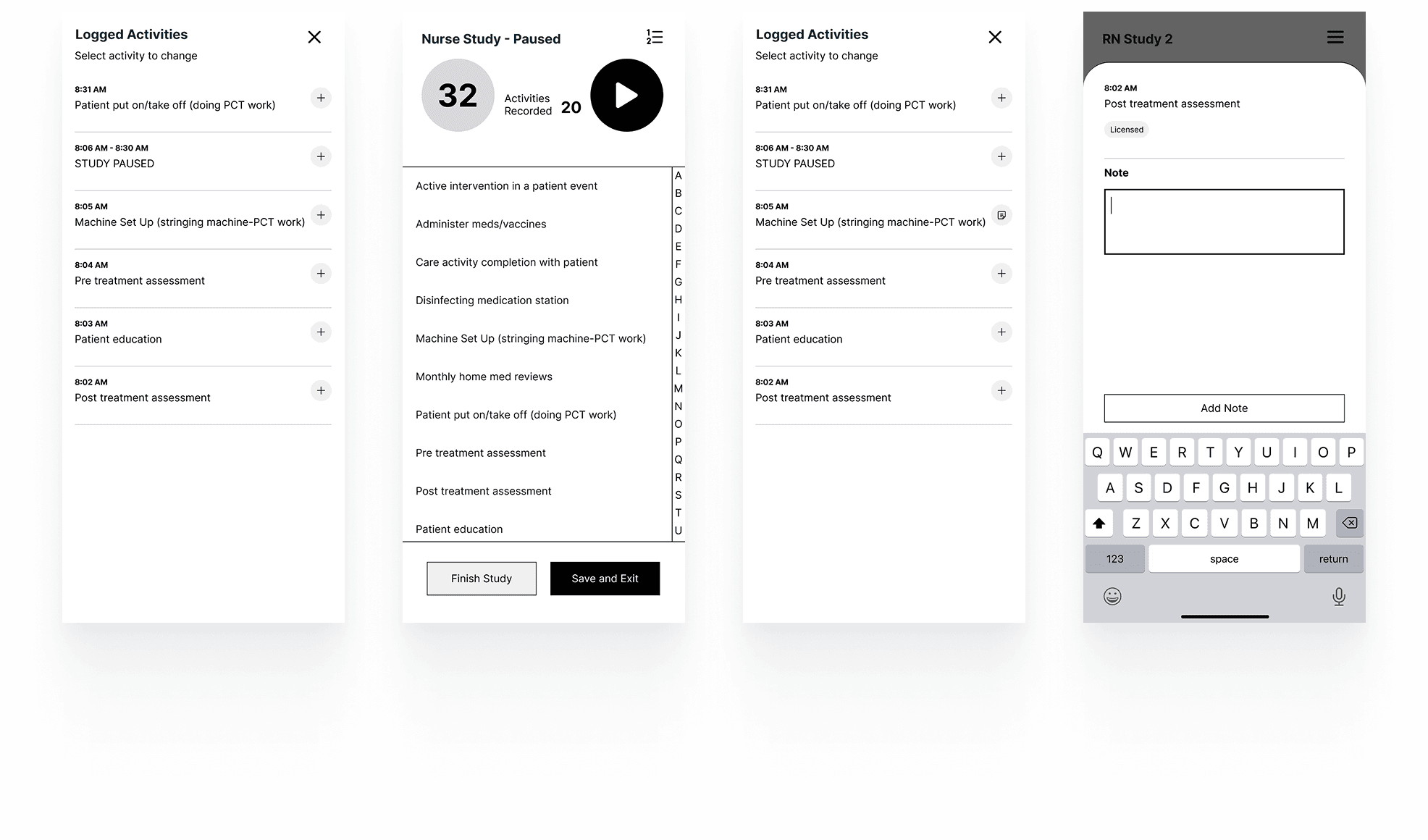
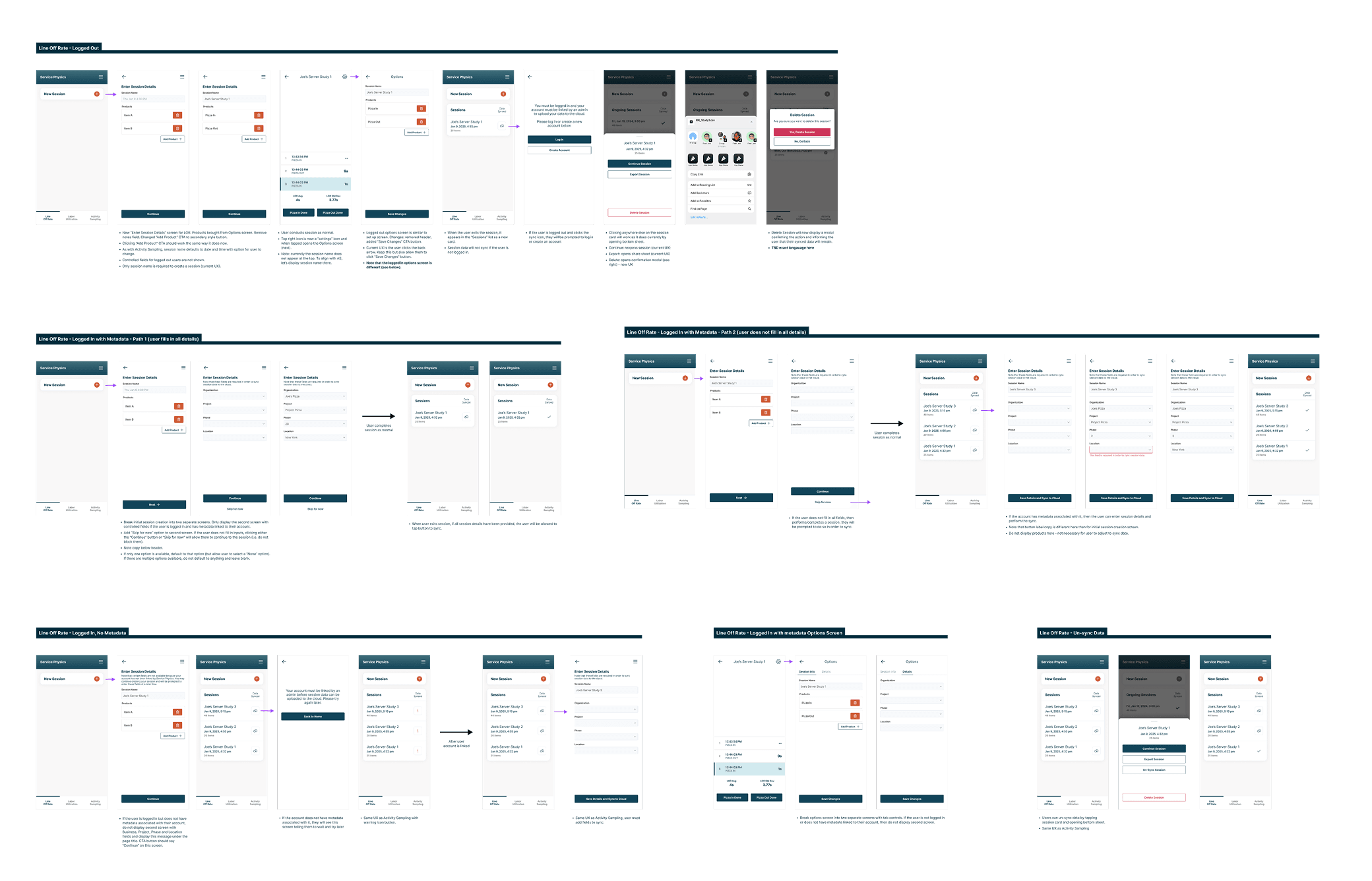
Once the overall scope was determined, we moved forward with designing a robust set of wireframes.
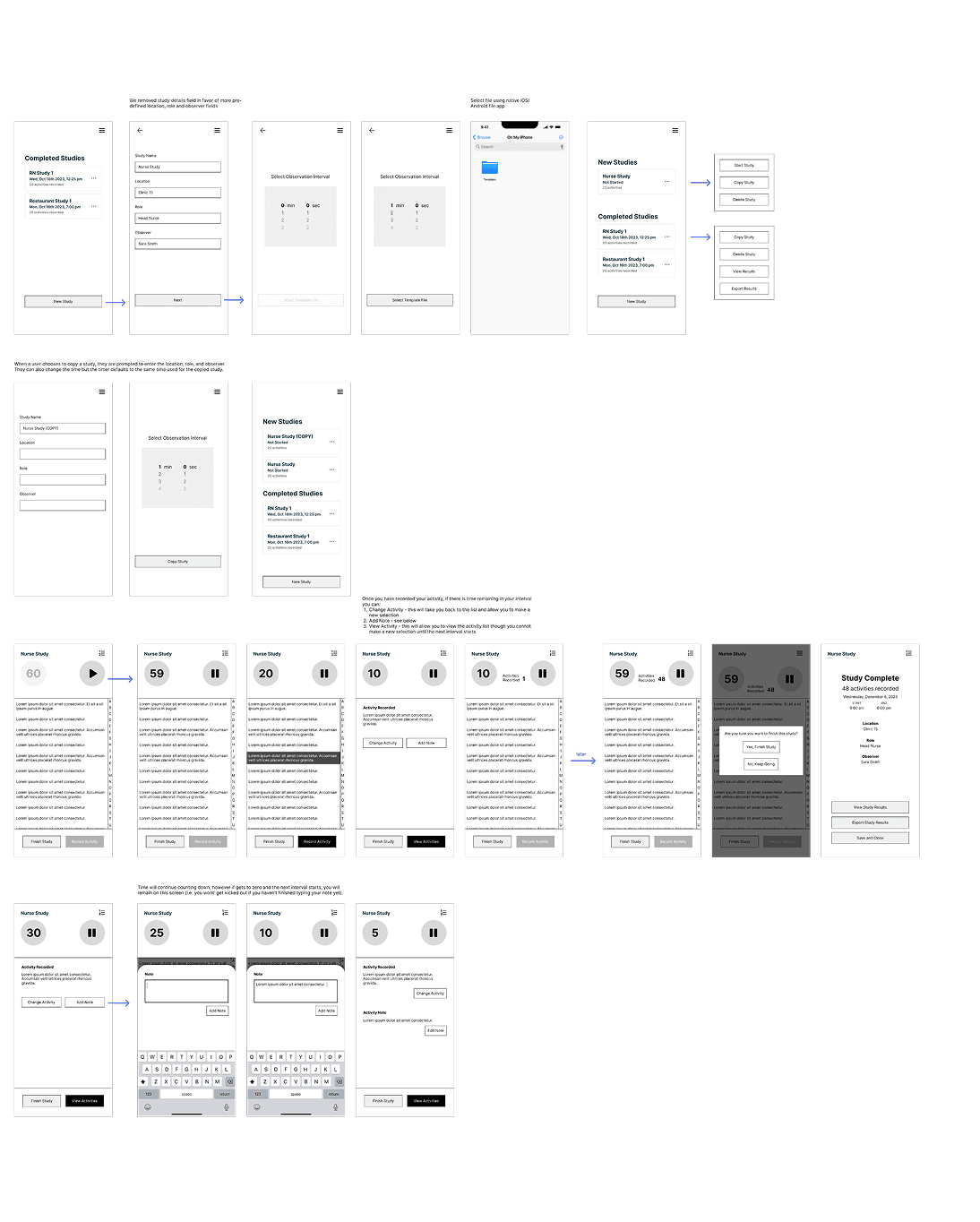
This allowed us to work through specific interactions in collaboration with Service Physics and perform a deep dive on core functionality, including initial study setup, customization options, exporting results, and adding study notes, among other things.
This step ensured that the user experience would be dialed in before addressing cosmetic updates.
Highfidelity
In order to maintain visual consistency, we created a light Design System for Service Physics, which included color and text styles, icons and important components such as buttons and input fields.
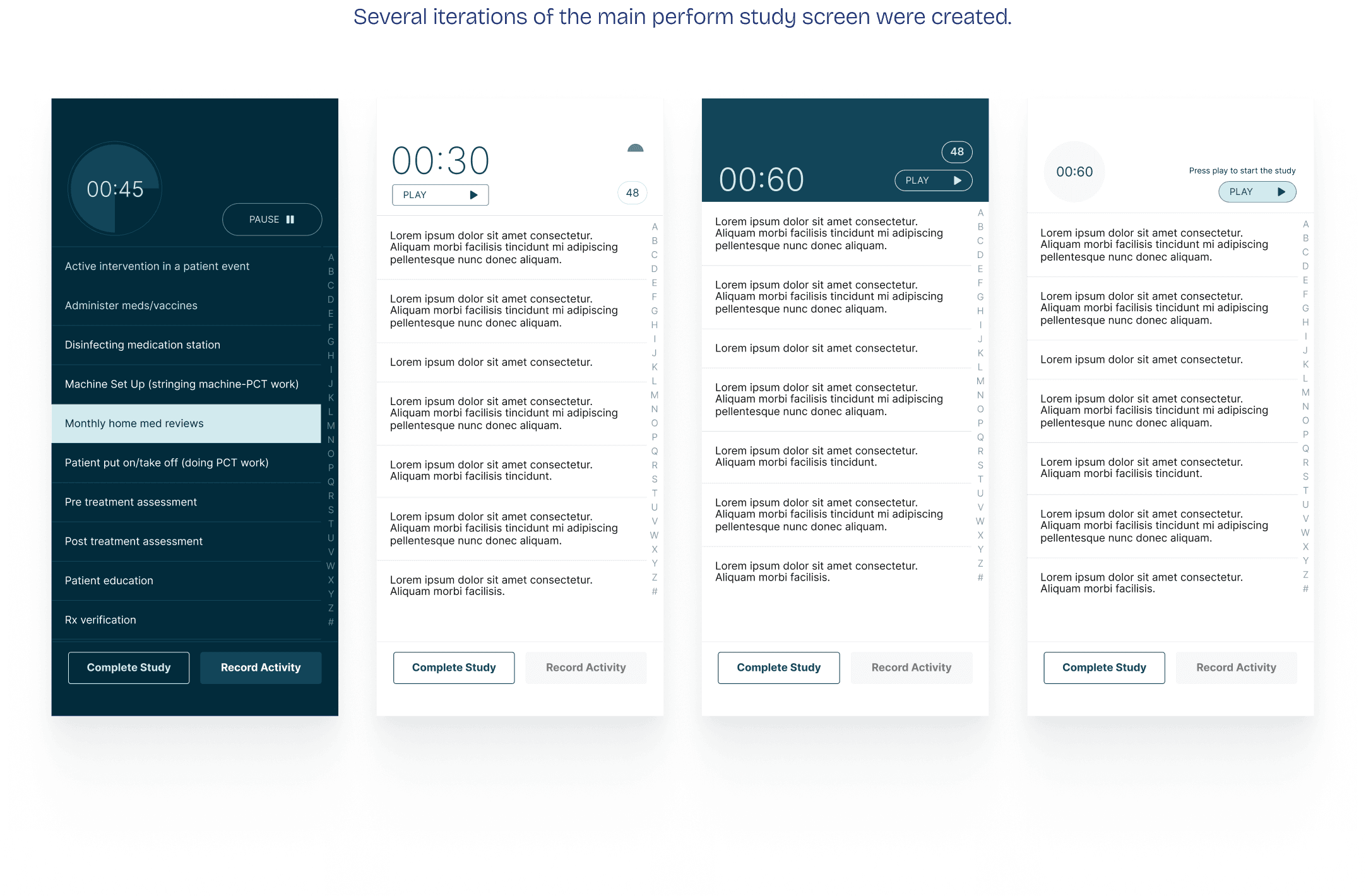
Because the app is an observational tool, we emphasized clarity and simplicity in our designs. Important screens, such as ones users would interact with during the study process, received several rounds of UI iterations.
Dev& testing
Once designs were finalized, and handoff was complete, the Beta Acid development team got to work updating the app and building new features. Several rounds of QA testing were performed to ensure the app worked flawlessly on both iOS and Android mobile devices.
Result
The new and improved Service Physics app transformed a process that was clunky and inefficient. Users now spend less time trying to deal with cumbersome laptops and spreadsheets, and are able to focus on making accurate observations. This ultimately enhances the company’s ability to deliver important insights for their clients.